Are Expensive Hair Products Worth It? Where to Spend and Save
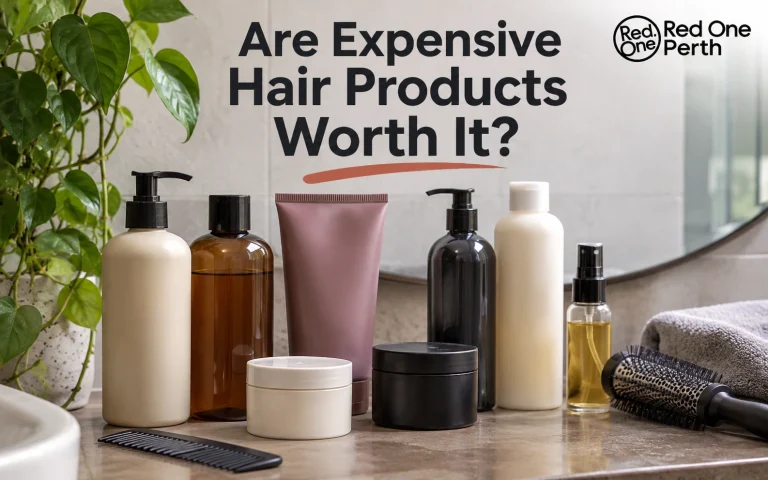
Expensive hair products are worth it when the extra money buys ingredients, concentration or performance your hair genuinely needs, especially in treatments, leave-in conditioners and styling products. For a basic everyday shampoo, a cheaper bottle often cleans just as well, and the extra money mostly pays for fragrance, packaging and a famous name.
After all, nobody enjoys paying $40 for a shampoo that does the same job as an $8 one. Buying a cheap gel that gives up on you by lunchtime feels just as bad.
In this guide, you’ll learn:
→ What you’re really paying for in a pricey bottle
→ What independent Australian testing found about cheap vs expensive shampoo
→ How salon, barber and supermarket products actually differ
→ The 5 situations where spending more pays off, and when cheap is perfectly fine
→ How to read an ingredient label and work out the real cost per use
What Drives the Price of a Hair Product? Ingredients, Packaging and Margin
Every bottle’s price is split across the same handful of costs. What changes from brand to brand is where the bulk of your money lands.
- Water and base cleansers. Water, listed as aqua, usually tops the ingredient list at every price point. Common surfactants such as sodium laureth sulfate (SLES) are cheap and widely used.
- Conditioning and active ingredients. This is where the real formula cost sits. Think silicones like dimethicone, cationic conditioners like behentrimonium chloride, polyquaternium, glycerin, hydrolysed keratin, argan oil and shea butter.
- Fragrance. A complex scent can be one of the dearest ingredients in a premium bottle, yet it does nothing for your hair’s condition.
- Packaging, marketing and retail margin. Weighty bottles, ad campaigns and the cut every shop takes (ours included) all sit inside the sticker price.
Is Expensive Shampoo Better Than Cheap Shampoo? What Australian Testing Shows
Not automatically. Every shampoo cleans the same basic way, using surfactants that lift oil (sebum), sweat and product build-up from your scalp.
Pricier shampoos often add more conditioning agents, so hair can feel softer and easier to manage. If your hair is healthy and uncoloured, a decent supermarket shampoo usually does the job.
What Independent Australian Testing Found
In a CHOICE shampoo user trial published in 2010, 41 volunteers rated each of 11 popular supermarket shampoos. The two best performers cost $2.78 per 100 mL or less, while two of the dearest, at $5.20 and $6 per 100 mL, landed among the worst. CHOICE concluded that price was no indication of quality.
A trichologist CHOICE consulted found little difference between the ingredient lists of the top and bottom performers. In his view, dearer shampoos mostly pay for perfume, packaging and marketing.
The trial is old, but newer expert advice lands in the same place. In a 2019 ABC report on cheap vs expensive shampoo, updated in 2020, experts including a dermatology professor and a Perth trichologist said the cheapest shampoos are mostly detergent. Pricier ones usually add conditioning ingredients, and the right pick depends on your hair type.
When a Pricier Shampoo Earns Its Price
- Colour-treated or bleached hair. Gentler, colour-safe formulas help colour last longer between salon visits. Our 12 Reasons Argan Oil Shampoo is a colour-safe option with argan, coconut and avocado oils.
- Grey or blonde hair that turns yellow. A toning shampoo with violet pigment helps counter brassiness, which a basic shampoo simply won’t do.
- Dry, curly or coily hair. Extra conditioning agents help cut frizz and tangles after every wash.
- Sensitive scalps. Milder surfactants than sodium lauryl sulfate (SLS), such as cocamidopropyl betaine, plus a pH close to your scalp’s slightly acidic level, can feel far more comfortable.
Do Salon Hair Products Work Better Than Supermarket Ones? Where Barber Products Fit In
Often for specific jobs, but not always for everyday basics. Salon and professional products tend to use more targeted formulas and higher levels of conditioning or styling ingredients. They also come with advice from someone who has actually seen your hair. Some supermarket products perform brilliantly, though, and some salon brands charge mostly for the name.
The ABC’s experts explained why salon formulas differ. Brands can make them more specialised because a hairdresser is there to match the product to the person. Supermarket formulas need to suit anyone who grabs them off the shelf, so they play it safe.
Barber products follow the same logic, with one key difference. Most of them are styling products rather than cleansers, and styling is exactly where price and performance part ways the most.
When Is It Worth Spending More on Hair Products? 5 Situations Where It Pays Off
Spend more when the product stays on your hair, solves a specific problem, or does a job you can see in the mirror all day.
1. Leave-In Conditioners, Masks and Treatments
These sit on your hair for hours, so ingredient quality and concentration matter far more than in anything you rinse off. A leave-in like Redist Two-Phase Leave-In Conditioner helps detangle and tame frizz between washes.
Keep expectations honest, though. As the ABC report points out, no product can truly heal damaged hair. A good treatment coats and smooths the cuticle so hair looks and behaves better.
2. Coloured, Bleached or Chemically Treated Hair
Colour, bleach and straightening services rough up the cuticle, so hair loses moisture faster. If you’ve spent a few hundred dollars at the salon, a weekly marula oil hair mask is cheap insurance for that investment.
3. Curly, Coily, Very Fine or Very Thick Hair
Curls usually want richer moisture and defining creams. Fine hair needs lightweight formulas that won’t fall flat by lunchtime. Generic products rarely nail either end.
4. Regular Heat Styling
If you blow-dry or straighten most days, a heat protector spray is one of the best bang-for-your-buck buys in the bathroom. It costs far less than fixing heat damage later.
5. Styling Products: Pomade, Clay, Cream and Powder
This is where barber-grade products earn their keep. Cheap gels and waxes can flake, turn greasy by arvo or cling on through three washes. Professional pomades, clays, creams and styling powders are built for reliable hold, a consistent finish and a clean wash-out.
That’s why barbers reach for formulas like the Uppercut Deluxe Matt Pomade. Water-based pomades like this one rinse out far more easily than heavy oil-based ones.
When Cheaper Hair Products Do the Job Just Fine
Now for the part most retailers skip. Save your money when:
- Your hair is healthy, uncoloured and has no special needs.
- You just need an everyday shampoo to keep your scalp clean.
- Your hair is short, washed often and styled simply.
- The product rinses off within a minute, like most shampoos and basic conditioners.
Put your money into one good treatment or styling product before you splash out on a pricey shampoo and conditioner set. You’ll see the difference far more.
Cheap vs Expensive Hair Products: Where to Spend and Where to Save
Use this guide next time you’re stuck in the aisle.
| Product | Spend or save? | Why | Label check |
| Everyday shampoo | Save (unless coloured) | It’s on your head for a minute | Surfactant type near the top |
| Rinse-out conditioner | Save or mid-range | Short contact time | Cationic conditioners or silicones in the first five |
| Leave-in conditioner | Spend | It stays on all day | Hero oil or protein listed high |
| Hair mask | Spend if dry or coloured | Longer contact, richer formula | Oils and butters before preservatives |
| Pomade, clay or cream | Spend | Hold, finish, and wash-out vary hugely | Water-based or oil-based |
How to Tell If a Hair Product Is Worth the Price
You don’t need a chemistry degree, just two minutes and the back of the bottle.
In Australia, the ACCC’s cosmetics ingredients labelling standard requires ingredients to be listed on the container. Those at 1% or more appear in descending order by volume or mass, followed by those under 1% in any order, with colour additives last. So the first few names show what you’re mostly paying for.
- Check the first five ingredients. Aqua first is normal. What follows shows whether the formula is mostly detergent or genuinely rich in conditioners.
- Find the hero ingredient. If the front shouts argan oil, look for its INCI name, Argania Spinosa Kernel Oil, near the top. If it appears after parfum and preservatives, there’s probably only a tiny amount.
- Work out the cost per use. Check the price per 100 mL, then how much you use each time.
- Match it to your hair type and your hair care routine. A great product for thick curls can flop on fine, oily hair.
- Test before you commit. Try a smaller size first, or ask someone who knows products before you spend big.
Cost Per Use: Supermarket vs Professional Products in Real Numbers
We averaged typical shelf prices at Australian supermarkets, chemists and salon and barber retailers in November 2026. Amounts per use are our estimates for short to medium hair.
| Product | Typical price range | Average price and size | Amount per use | Cost per use |
| Supermarket shampoo | $4 to $12 | $8 for 400 mL | 8 mL | about 16c a wash |
| Salon shampoo | $20 to $60 | $40 for 300 mL | 8 mL | about $1.07 a wash |
| Supermarket hair wax | $11 to $16 | $13 for 75 g | 2 g (with a midday top-up) | about 35c a day |
| Barber-grade pomade | $25 to $36 | $30 for 100 g | 1 g | about 30c a day |
The supermarket shampoo wins easily. Even if a concentrated salon formula halved the amount you need, it would still cost more than three times as much per wash.
Styling tells a different story. The barber-grade pomade costs more than double on the shelf, yet it works out cheaper per day if your wax needs a midday top-up. If your cheap wax genuinely holds all day, stick with it.
Our Honest Advice as a Perth Hair Product Retailer
If your bathroom has a $40 shampoo sitting next to a cheap gel that flakes by lunchtime, we’d flip that around.
Spend where it shows, on styling products, leave-ins and treatments. Save where it doesn’t, on basic cleansing. And if you’re unsure what your hair needs, ask before you buy. A quick chat costs nothing and saves you buying twice.
Need Help Choosing? Talk to Red One Perth Before You Buy
At Red One Perth, we stock professional and barber-grade hair care, from colour-safe shampoos and leave-in conditioners to pomades, creams and styling powders. Tell us about your hair and how you style it, and we’ll point you to products that earn their place on your shelf, even when that’s the cheaper option.
Order online with delivery Australia-wide, or click and collect from our Yokine store. Barbers and stylists can ask about our exclusive trade prices, and if you find a product for less elsewhere, our Price Beat Guarantee has you covered.
Expensive Hair Products FAQs
Are supermarket shampoos bad for your hair?
No. Most clean well and suit healthy hair. Some use stronger surfactants that can feel drying on coloured, curly or sensitive hair, where a gentler formula is worth it.
Is sulphate-free shampoo worth paying more for?
Often yes for coloured, dry, curly or sensitive hair, because milder surfactants clean more gently. For healthy, oily or short hair, a standard sulphate shampoo works perfectly well.
Why does my hair feel greasy after switching to an expensive shampoo?
Rich conditioning agents and silicones can weigh down fine or oily hair. Switch to a lighter, volumising formula before deciding the pricier shampoo doesn’t work.
Does hair get used to the same shampoo?
Not really. Hair doesn’t build a tolerance. Usually it’s product build-up, which a clarifying wash every couple of weeks clears without changing brands.
Can expensive hair products fix hair loss or thinning?
No shampoo or styling product should be relied on for hair loss. If you notice thinning or shedding, see your GP, a dermatologist or a trichologist for proper advice.