
Beard Oil vs Beard Balm: Which One Should You Use?
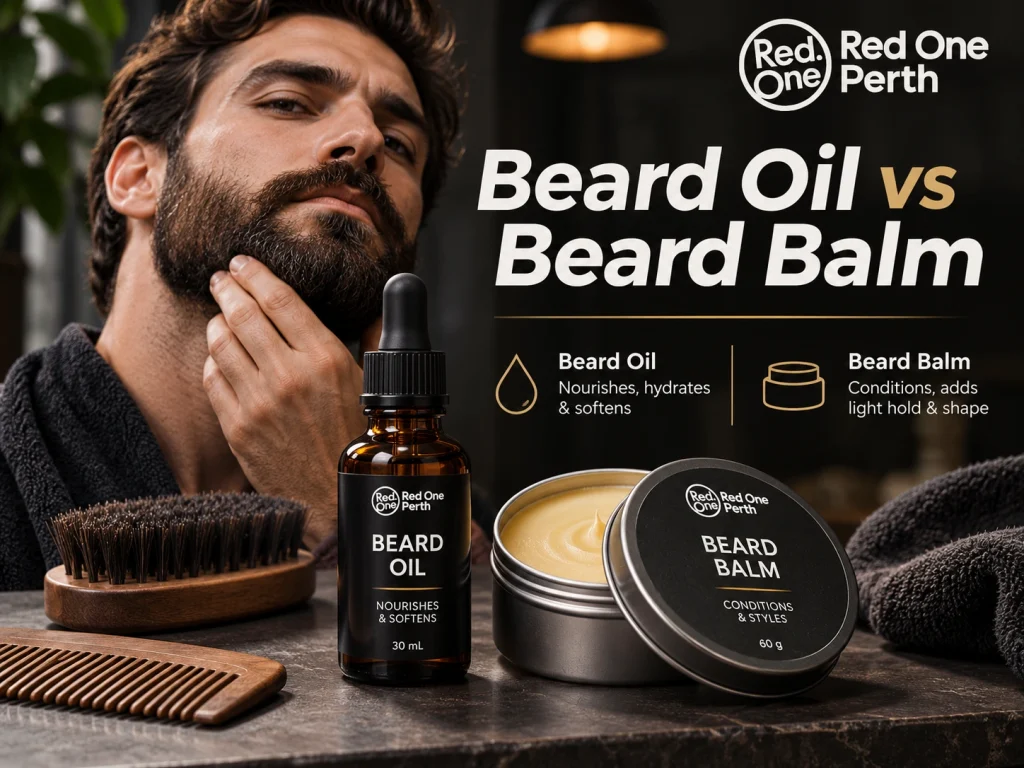
Table of Contents
Beard oil vs beard balm is one of those questions that sounds simpler than it is, because the two products overlap a lot. Both soften the hair and look after the skin underneath. The difference is in the feel and in what they do for the shape of your beard.
This guide covers how to choose between them, how to use each one properly, and what to watch for if your skin reacts. Where it matters, it also looks at Perth conditions.
What Is the Difference Between Beard Oil and Beard Balm?
Beard oil is a liquid, usually a blend of carrier oils, that softens the hair and conditions the skin underneath without adding hold. Beard balm combines oils with butters and wax, so it conditions as well but also gives light hold for taming flyaways and shaping.
Ingredients vary from product to product, so the label is the best guide to what you’re actually getting. As a general pattern, the differences look like this:
| Feature | Beard oil | Beard balm |
| Texture | Thin liquid | Soft, waxy paste |
| Main job | Softens hair, conditions skin | Conditions, plus light hold and shaping |
| Hold | None | Light |
| Often suits | Short to medium beards, stubble, dry skin underneath | Medium to long beards, wiry or unruly hair |
| Applied with | A few drops, warmed in the palms | A small scoop, melted between the palms |
Which One Suits Your Beard and Skin?
Choose oil if you mainly want softness and less dryness underneath. Choose balm if you also want to control flyaways and give the beard some shape. Length is a rough guide, but the finish you want matters more.
A few situations tend to point one way or the other:
- Stubble to a short beard: oil is usually enough. Balm can feel heavy on short hair and sit on the skin.
- Longer or wiry beards: balm helps flatten flyaways and keep the shape through the day.
- Dry or tight skin under the beard: oil spreads easily and gets down to the skin.
- Oily or acne-prone skin: be careful with anything that leaves a heavy layer on the skin. Healthdirect notes that oils, creams and ointments that block hair follicles can cause folliculitis, and it advises choosing skin products that don’t clog pores. Use a small amount, keep product on the beard rather than the skin, and look for products labelled non-comedogenic where you can.
Does Perth’s Climate Change the Choice?
A little. The Bureau of Meteorology describes Perth as having warm to hot dry summers and cool to mild wet winters, with most of the year’s rain falling between May and October. That’s a long dry stretch.
In the hotter months, you may prefer a lighter application if heavier products feel uncomfortable, and in cooler weather you might reach for balm when you want more control.
Neither is dictated by the season: your skin, your beard and the finish you like decide it. One practical point: depending on the formula, a balm left in a hot car or a bag in the sun can soften or separate, so keep it somewhere cool.
How Do You Use Beard Oil?
Apply a few drops to a clean, towel-dried beard, rub them between your palms, and work the oil through from the skin out to the ends. Start small, because you can always add more, but you can’t take it off.
- Start with a clean beard. Washing first means the oil goes onto clean skin and hair. Pat the beard dry until it’s just damp or fully dry.
- Use a few drops. Short beards need very little. Longer beards need more. Add a drop or two at a time.
- Warm it up. Rub your palms together so the oil spreads evenly across your hands.
- Work it in from the roots. Use your fingertips to get down to the skin first, then stroke through the length of the beard.
- Comb it through. A comb or brush spreads whatever’s left and sorts out any patches that feel heavier.
A common routine is oil once a day, often after a shower. If the beard starts to look greasy or flat by lunchtime, you’re using too much, so cut back.
How Do You Use Beard Balm?
Scoop a small amount, melt it between your palms until it turns to a thin film, then press and stroke it through a clean, dry beard from the underside outwards. Balm is thicker than oil, so the amount matters more.
- Begin with a pea-sized amount. That’s usually plenty for a short beard. A longer beard may need a bit more, added gradually.
- Melt it first. Rub your palms together until the balm turns glossy and soft. Applying it straight from the tin leaves lumps.
- Work it through from the skin. Run your fingers up through the underside of the beard first, then smooth over the top and sides.
- Shape it. Use your fingers or a comb to set the direction and tidy flyaways. Balm gives light hold, so it won’t lock a style the way a strong styling product does.
- Check the finish. If the beard looks shiny, clumpy or stiff, you’ve used too much. Work a comb through to spread it out, and use less next time.
Balm tends to go on after the beard is dry, and it’s more of a daily styling step than a deep conditioning one.
Can You Use Beard Oil and Beard Balm Together, and Which Goes First?
Yes. A common order is oil first for conditioning, then a small amount of balm over the top for shape and hold. Use less of each than you would on its own, since the two layer up quickly.
Brands don’t all agree on the order, and some put balm on first, so follow the directions on your product if they differ. Oil first is the more common advice.
A simple routine looks like this:
- Wash the beard and the skin under it, then pat dry.
- Put a few drops of oil on the damp or dry beard and work it through.
- Once the oil has settled and the beard feels mostly dry, melt a small amount of balm and smooth it over the top.
- Comb or shape the beard.
If you want to see where oil and balm sit alongside washes, brushes and the rest of the kit, this beard grooming routine guide walks through each step.
On days when the beard behaves, oil on its own is fine. On days when it doesn’t, add the balm.
Where Do Trimming and Shaping Fit In?
Trim first, then apply oil or balm. Neither product replaces a trim, and a well-cut beard takes far less product to look tidy.
Oil and balm work on the finish, not the outline. The cheek line, neck line and overall length come from your trimmer or scissors, and the products then soften the cut hair and keep it lying the way you want.
If you’re still choosing a trimmer, this roundup of beard trimmers covers cordless and corded options and how to look after them.
If you shave the edges or the neck, take care with the skin there. Healthdirect notes that shaving can irritate the follicles, and that ongoing beard inflammation after shaving (pseudofolliculitis barbae) mainly affects men with darker skin and tightly curled hair. If you get repeated bumps, that’s worth raising with a doctor rather than covering with more product.
Can Beard Oil or Balm Irritate Your Skin?
Yes, either one can, mostly through an ingredient your skin doesn’t agree with or through using too much. Try a small amount on a discreet area of skin first, and stop using the product if a rash, burning or itching appears.
Healthdirect lists cosmetics as one possible cause of allergic contact dermatitis, alongside things like plants and hair dyes. That includes products labelled natural, since plant-based ingredients can be allergens too.
See a doctor if the rash is getting worse while you use a product, spreads, appears suddenly or is painful, or if you feel unwell or have a fever.
Healthdirect also notes that a doctor can confirm an allergy with patch testing, where patches holding small amounts of possible triggers are usually left on the skin for two days and checked, with a recheck for delayed reactions. A quick test at home isn’t the same thing, and it can’t rule out a later reaction.
Flaking, redness or persistent itch under the beard isn’t always caused by the product you’re using. Seborrhoeic dermatitis can affect the beard, and extra oil won’t treat the underlying condition. If it persists or gets worse, see a doctor.
FAQs
Do I need both beard oil and beard balm?
No. Oil on its own covers softness and conditioning, and balm on its own covers conditioning plus light hold. Plenty of beards do fine with just one.
Can I use beard balm on a short beard?
Yes, in a very small amount. If it leaves the beard looking shiny or stiff, switch to oil or use less.
Should I put beard oil on a wet or dry beard?
Either works. A damp beard spreads the oil more easily, while a dry one shows you how much you’ve used. If the beard is dripping, towel it off first so the oil doesn’t just slide away.
Which should I try first?
If you mainly want to soften the beard and condition the skin underneath, start with oil. If you also want to tame flyaways and give the beard some shape, try balm. Length is a rough guide, but the finish you want matters more. Whichever you choose, try a small amount on a discreet area of skin first.