
How to Choose the Right Barber Scissors and Shears for Different Cutting Techniques
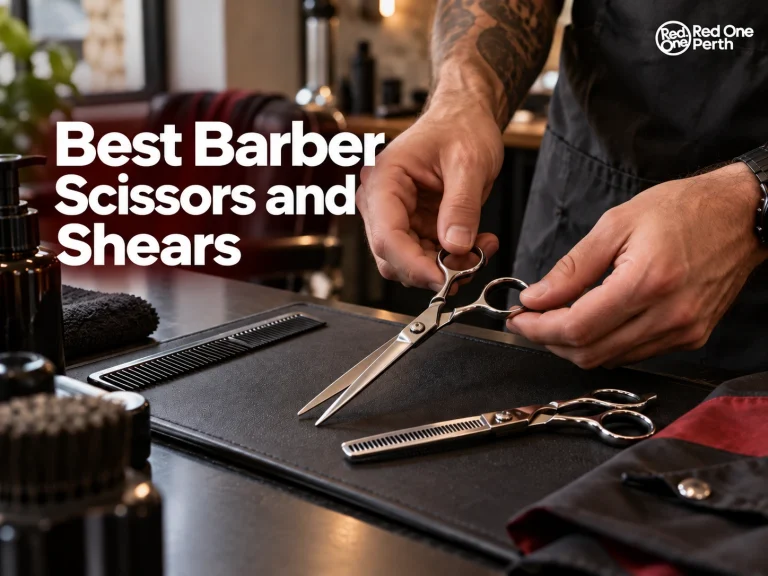
Table of Contents
The right pair of barber scissors can make a haircut easier from start to finish. It affects how much control you have, how quickly you can work and how cleanly the hair cuts.
But there isn’t one pair that does everything. A shear that feels great for scissor-over-comb may be awkward when you’re working around the ears. Thinning shears have a different job again, while texturizing shears are useful when you want more separation and movement.
So, if you’re replacing an old pair or putting together your first kit, it helps to know what you’re actually buying. The size, blade style, handle and teeth all matter, but your usual cutting techniques should come first.
The Main Types of Barber Scissors
Most barbers will have a pair of straight cutting scissors as their everyday tool. These have two cutting blades and are used for everything from basic trimming and shaping to layering, point cutting and creating clean lines.
Then there are thinning or blending scissors. One blade has teeth, which allows some of the hair to pass between the teeth while the blades close. They’re useful when you need to take out some internal weight without changing the outside shape too much.
Texturizing scissors also have teeth, but they’re generally used when you want a more noticeable textured or separated finish. Many texturizing shears have fewer or more widely spaced teeth, although this varies between brands.
It’s worth remembering that the terms thinning, blending and texturizing aren’t used consistently across the industry. When comparing products, look at the actual tooth pattern and the manufacturer’s description instead of relying on the name alone.
If you’re comparing different types, Red One Perth’s barber scissors and shears include straight and thinning options in several sizes.
Choosing the Right Scissor Size
Scissors are normally measured from the tip of the blade to the outside of the finger ring. You’ll commonly see professional hairdressing scissors in sizes from around 5 inches through to 7 inches or more.
A shorter shear can feel easier to control when you’re doing detailed work, while a longer blade can save time when you’re working through larger sections with hair scissors.
|
Size |
Common use |
|
4.5–5.5″ |
Detail work, fringe and smaller areas |
|
5.5–6.25″ |
General cutting and everyday work |
|
6.5–7″ |
Scissor-over-comb and larger sections |
|
7″+ |
Longer-blade techniques and specific barbering styles |
Don’t treat those ranges as rules. Many professional barbers prefer 7-inch scissors for hair cutting, but preference still varies between barbers and hairdressers doing the same work.
If most of your work involves short cuts, detailing and general shaping, a 5.5–6 inch pair can be a sensible starting point, and a 6-inch size can work well for both professionals and home users. If you regularly use scissor-over-comb, you may prefer something longer. Longer scissors can also support more haircutting techniques.
Red One’s current range includes 5.5″, 6″, 6.5″, 7″ and 7.5″ options, along with thinning shears, so you can compare different lengths rather than choosing one size simply because it’s marketed as a barber shear.
Match the Shear to the Technique
This is where choosing scissors becomes much easier. Instead of asking which shear is “best”, think about what you need it to do.
For blunt cutting and clean lines, straight cutting shears are the obvious choice. You want a sharp, properly adjusted pair that closes cleanly through the hair without pushing or folding it.
For point cutting, a sharp cutting shear gives you the control needed to soften a line and remove small amounts from the ends. The technique matters just as much as the scissors.
For slide cutting, convex-edged shears are commonly used because the smooth blade geometry allows the scissors to move through the hair with relatively little drag. They’re particularly useful for barbers who regularly use slicing techniques.
For scissor-over-comb, longer barber shears can be helpful because the blade covers more hair along the comb and supports precision cutting. A 6.5–7 inch shear is a common choice for this type of work, although experienced barbers often settle on whatever length feels natural to them.
For removing bulk, thinning or blending shears can take some weight out of the hair without completely changing the outline, and many barber scissors setups include one of them as a second tool for bulk removal. Use them carefully, especially on fine or curly hair. Taking too much out in one area can leave an uneven finish.
For creating visible texture, texturizing shears can be a better option. They are useful for choppy crops, layered styles and other cuts where separation is part of the finished look.
If you’re building your whole setup rather than buying scissors alone, Red One’s guide to essential barber tools covers the other equipment commonly used alongside shears, including clippers, trimmers and combs.
Thinning vs Texturizing: What’s the Difference?
This is one of the questions that comes up most often when choosing barber scissors.
In simple terms, thinning or blending shears are usually chosen when the aim is to remove weight. Texturizing shears are generally chosen when you want to create separation or movement.
There is some overlap. A shear with a particular tooth pattern might be described as a thinning shear by one manufacturer and a texturising shear by another.
That’s why tooth count alone shouldn’t be used to decide what a shear will do. Tooth spacing, tooth shape and the way the scissors are used all influence the result.
If you’re unsure about a particular pair, check the manufacturer’s description before buying.
What Makes Professional Barber Scissors Different?
Professional shears are designed specifically for cutting hair. Household or craft scissors are made for completely different jobs and don’t provide the same level of control or cutting performance.
Blade Quality and Steel Types
The difference isn’t simply about having a sharper blade. Professional shears used by hairdressers and stylists are typically sharper than regular scissors, deliver clean cuts, and quality scissors hold an edge longer. Professional shears can have specialised blade geometry, adjustable tension, ergonomic handles and construction designed for regular use.
The steel is worth looking at, too. Choosing high-quality stainless steel helps barber scissors and shears last longer, and quality hairdressing shears are made for repeated salon and barber use.
Professional scissors are expertly crafted from several types of stainless and alloy steels, including Japanese 440C and VG-10, which are known for holding a sharp edge longer and resisting corrosion. iCandy scissors are crafted from premium Japanese VG10 steel. However, the steel name alone doesn’t tell you everything about the quality of the finished shear. Manufacturing, heat treatment and blade construction also matter.
Blade Designs
You’ll also need to decide between blade designs and blade types. Convex edges are commonly associated with precision and slide cutting, while beveled edges are durable, especially effective for blunt cutting, and widely used for everyday cutting. Neither one is automatically right for every barber.
Handle Styles and Comfort
Then there’s the handle. Offset, crane-style and swivel handles give you different hand positions, and some models add ergonomic design details like finger rests or inserts to improve grip. What feels comfortable to one barber may feel completely wrong to another, so comfort and control should take priority over a particular handle style. Good ergonomics can also reduce hand fatigue and ease strain on the shoulders during long sessions.
Balance and Usability
Balance is just as important. If the scissors feel awkward or heavy after only a few minutes, they’re unlikely to feel better several hours into a busy day.
A good pair should feel like a tool you can work with naturally rather than something you constantly have to adjust your hand around.
Looking After Your Barber Scissors
Even a good pair of shears won’t stay in good condition if they’re neglected.
Wipe the blades after use and remove hair or product residue. Keep them dry and follow the manufacturer’s instructions for cleaning and lubrication.
The pivot also needs attention. If the manufacturer recommends oiling, use a small amount of suitable shear oil rather than soaking the mechanism.
Pay attention to how the scissors feel. If they start pulling, folding or pushing the hair, check the tension and blade condition. Tightening the screw isn’t always the answer; a damaged or dull edge may need professional servicing.
There’s no fixed sharpening schedule that applies to every barber. Someone cutting hair all day may need sharpening several times a year, while a lower-volume user may go much longer. How the scissors perform is a better guide than a date on the calendar.
Convex shears deserve particular care when sharpening because their edge geometry can be altered by incorrect sharpening.
Finally, don’t throw your shears loose into a tool bag. Keep them in a case, holster or dedicated pouch where they won’t knock against other equipment.
How Many Scissors Does a Barber Need?
You don’t need a drawer full of scissors to get started, and a beginner doesn’t need a big collection when high-quality hair scissors can cost anywhere from about $20 to $500 depending on quality and use case.
A beginner can cover a lot of everyday work with one good pair of straight cutting shears around 5.5–6 inches, which gives you solid value for your money. Once you’re comfortable with them, adding a pair of thinning or blending shears gives you another option for removing weight.
If you regularly perform scissor-over-comb, a longer pair can be worth adding. Likewise, a texturising shear makes sense if textured and choppy styles are a regular part of your work.
There’s no need to buy every type at once. Build the kit around the cuts you actually perform, and add accessories only when they support the way you work.
You can also browse Red One Perth’s wider range of professional barber supplies if you’re putting together a complete workstation rather than replacing scissors on their own.
Find the Right Barber Scissors at Red One Perth
The best scissors aren’t necessarily the most expensive ones. What matters is whether the length, blade, handle and overall feel suit the way you cut.
Start with a reliable pair of straight cutting shears, then add thinning or texturising options as your work calls for them. If you’re ready to compare different sizes and styles, take a look at Red One Perth’s range of barber scissors; they serve barbers and hairdressers across Australia and can help you choose a pair that fits your cutting routine.
For a wider selection of equipment, you can also explore the complete barber supplies and tools store from Red One Perth or Contact us
FAQs
What size barber scissors should I get?
It depends on the techniques you use. Around 5.5–6 inches is a practical starting range for general cutting, while 6.5–7 inches can be useful for scissor-over-comb and larger sections.
Are 7-inch scissors good for barbering?
Yes, they can be useful for longer-blade techniques and scissor-over-comb. They aren’t automatically better than shorter scissors, though. Choose the size that gives you good control and feels comfortable during your usual work.
What is the difference between thinning and texturizing scissors?
Thinning or blending shears are generally used to reduce weight, while texturizing shears are more often used to create separation and movement. The terms vary between manufacturers, so check the tooth pattern and product description.
How often should barber scissors be sharpened?
It depends on how often they’re used and how they’re maintained. Busy barbers may need sharpening several times a year, while occasional users may go longer. Pulling, folding or poor cutting performance are signs that the shears need attention.
Can I use regular scissors to cut hair?
It’s better to use scissors made specifically for cutting hair. Household scissors aren’t designed for the same level of precision and control.